





















Be careful — this is the overarching Danger, Warning, and Caution Signs communicate. What not a lot of people know though is that each term signals a distinct risk level in safety management and hazard communication.
The best way to distinguish these common safety signs is by examining the specific risk level they represent.
| Safety Sign | What It Means |
|---|---|
| Danger Sign | A serious hazard that WILL cause severe injury or loss of life if ignored |
| Warning Sign | A serious hazard that CAN cause severe injury or loss of life |
| Caution Sign | A lower-level hazard that may cause minor injury |
The Occupational Safety and Health Administration (OSHA) and the American National Standards Institute (ANSI) recognize these categories as official terms in safety signs.
Danger Signs: The Highest Level of Risk
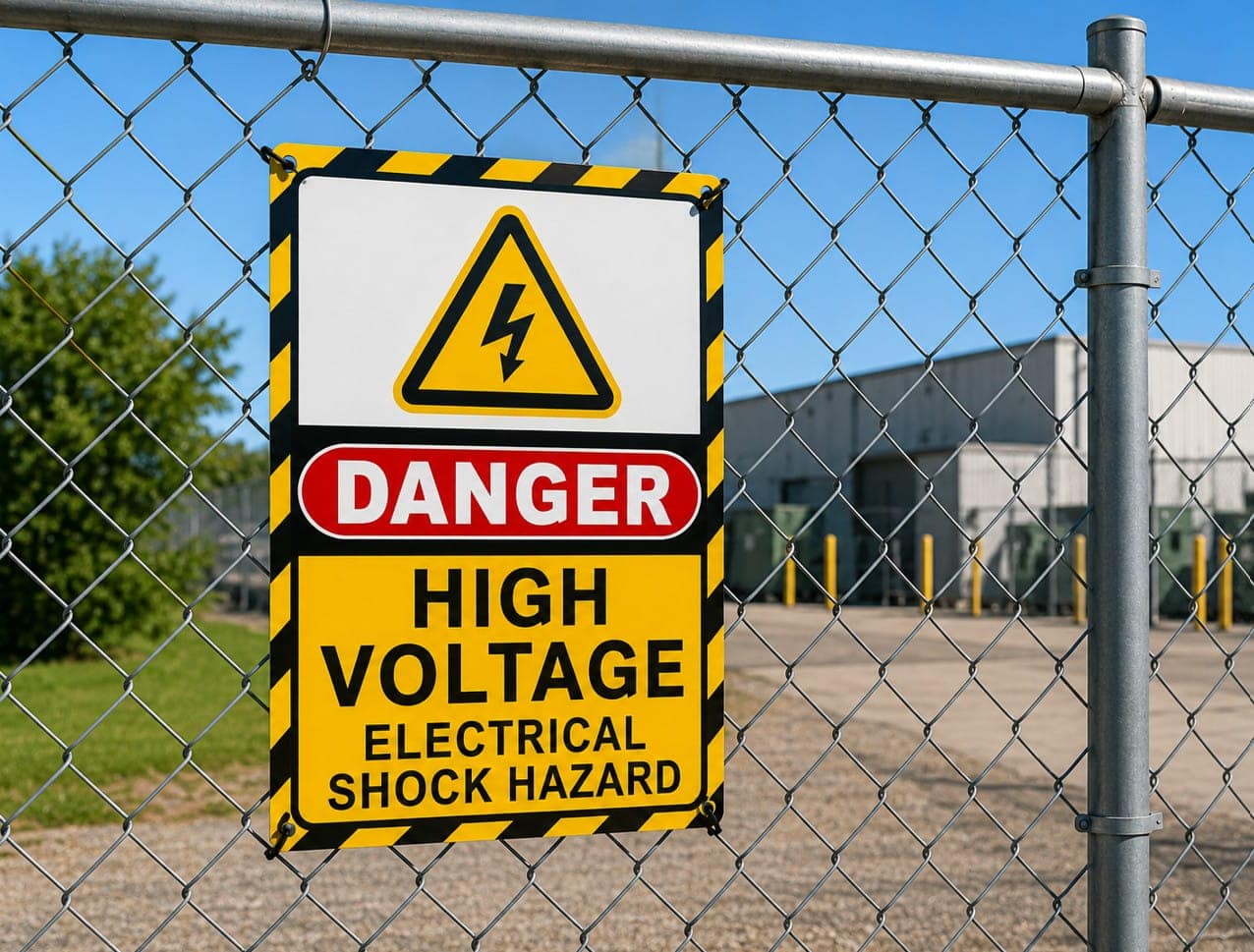
High voltage danger sign on a chain-link fence
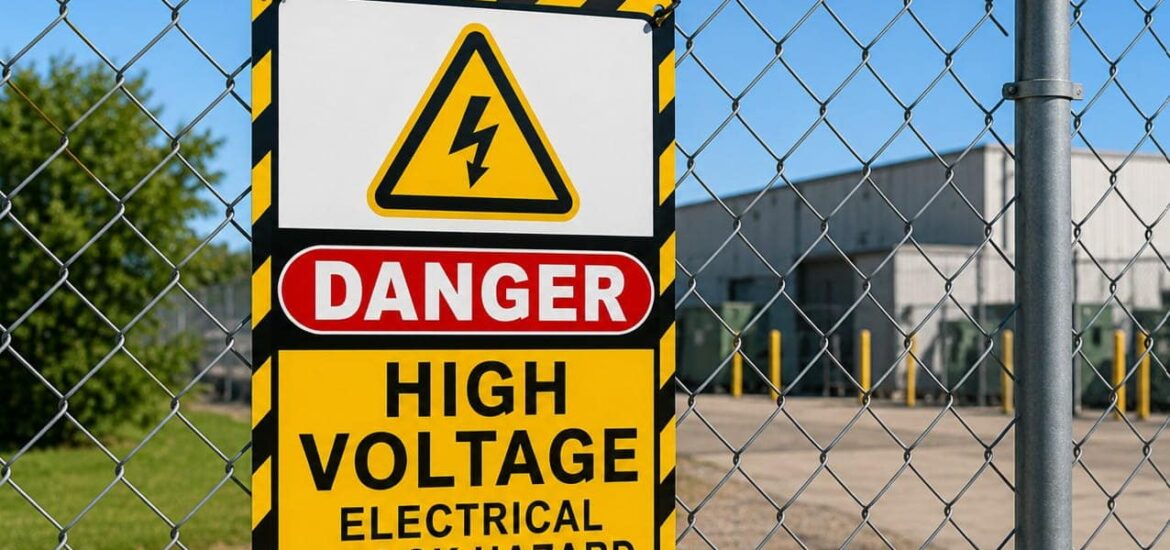
Danger Signs indicate hazards that are likely to cause severe injury or loss of life. They display bold red, black, and white colors to demand attention. These signs are often used around these areas:
-
- Confined spaces
- Areas where heavy machinery are operated and stored
- Explosive or highly dangerous environments
- High-voltage facilities
Warning Signs: Serious Risks Can Happen If Ignored
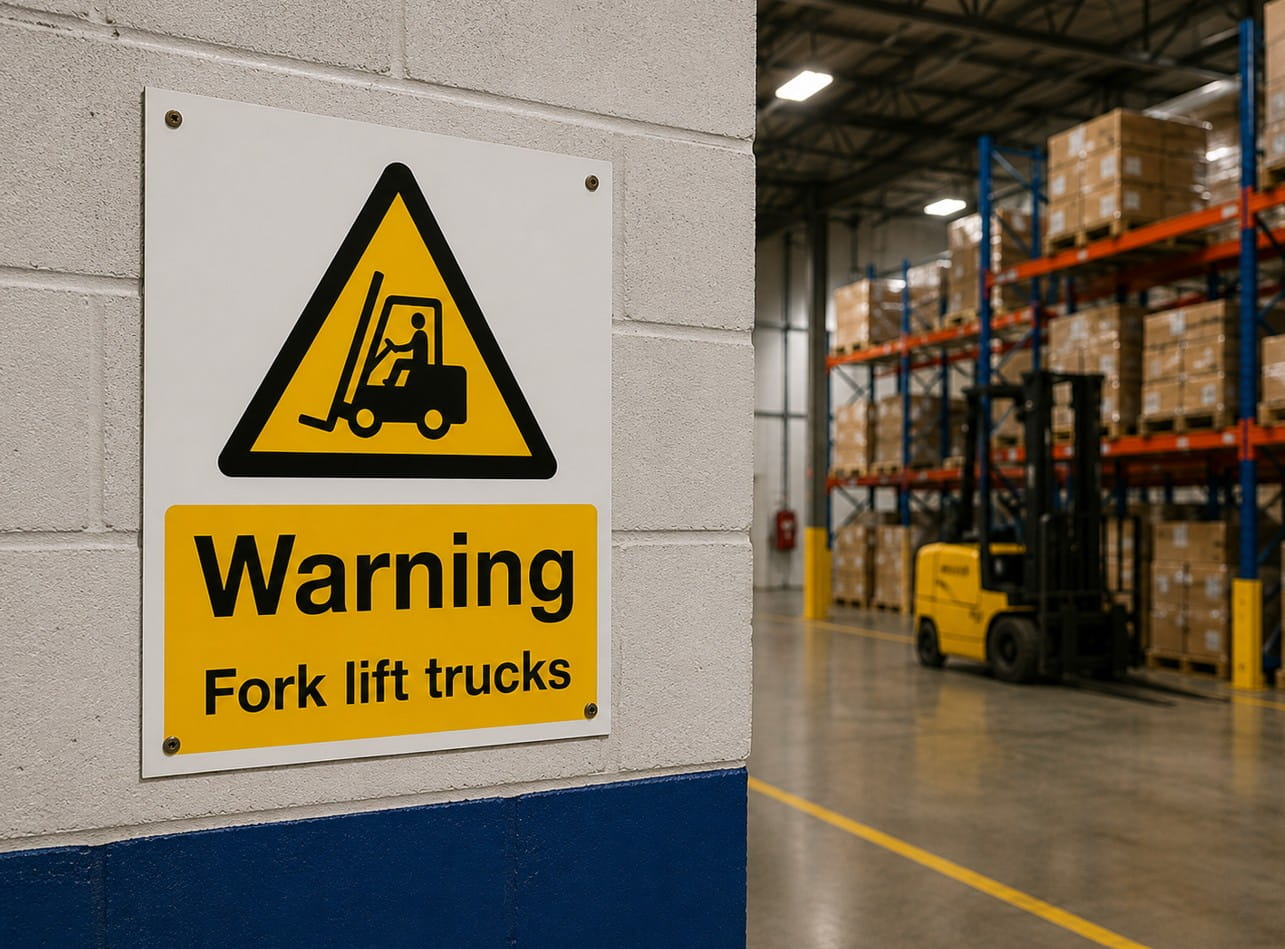
Forklift warning sign on a warehouse wall
While many believe Warning Signs and Danger Signs are interchangeable, knowing the difference between these two signs is critical to safety. Warning Signs, much like Danger Signs, indicate risks that could cause severe injury or death if ignored. However, these hazards are generally less immediate or less severe than those marked with “danger.”
Warning Signs often feature black and orange colors and are commonly used in industrial areas with certain types of equipment, such as:
- Forklifts
- Moving equipment
- Machines and tools with hot surfaces
Caution Signs: Perfect for Everyday Safety Reminders
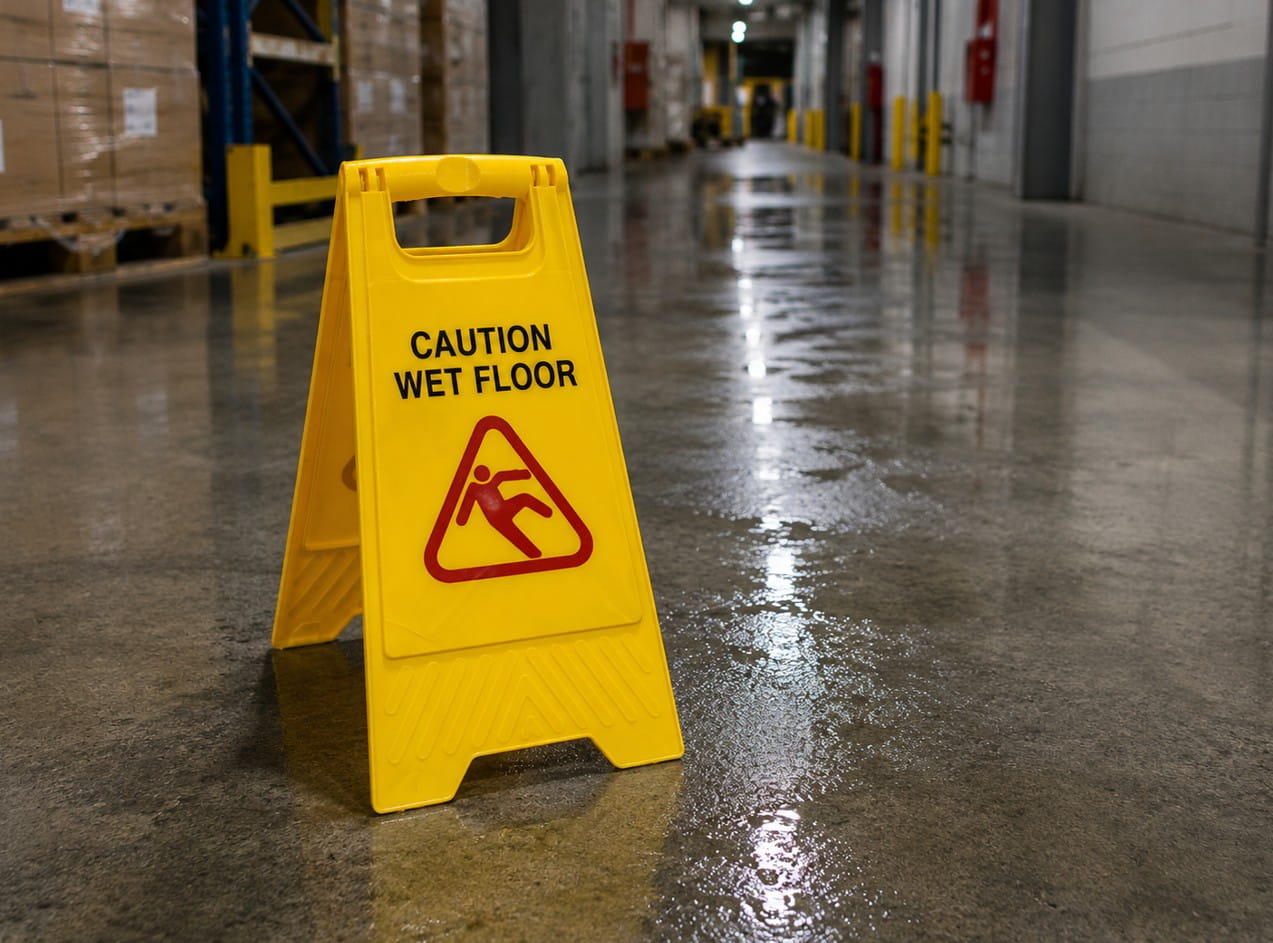
Yellow wet floor caution sign in a warehouse aisle
Caution Signs identify minor or moderate risks and promote general safety awareness. Among the most common situations where caution signs are useful include the following:
-
- Wet floors
- Trip hazards
- Sharp corners or edges
- Food warmer cabinets
Why Using the Right Safety Sign Matters
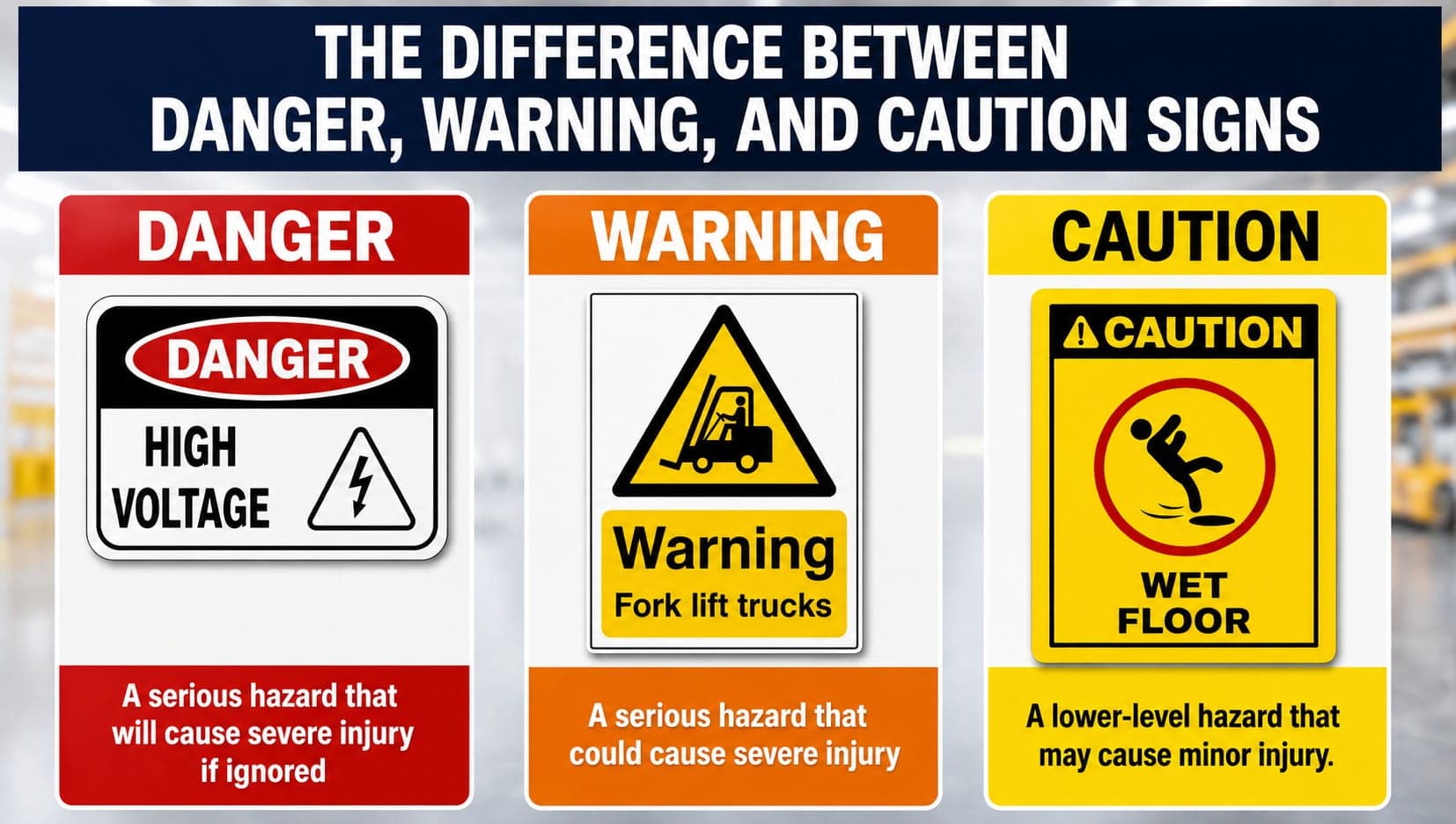
A graphic explaining the severity levels of safety signs
Imagine if every safety sign indicated “Danger” – it would be challenging to distinguish serious hazards from minor risks. As such, categorizing risk levels with specific terms ensures clear and consistent communication.
Aside from communicating the exact level of risks, an effective safety sign should also meet these requirements:
- Readable and clear text
- Eye-catching design
- Visible (e.g., eye-level placement and well illuminated)
A Quick and Simple Way to Remember These Safety Signs
Danger = “This is very serious.”
Warning = “Pay close attention.”
Caution = “Slow down and be careful.”
Safety signs in workplace settings must convey a clear message and communicate the exact level of risk to allow people to respond appropriately, preventing bodily injuries, property damage, delays, and costly lawsuits.
Disclaimer: This article is for general educational purposes only and is intended to help explain the difference between Danger Signs, Warning Signs, and Caution Safety Signs under commonly recognized OSHA and ANSI standards. It is not legal or compliance advice. Always refer to current OSHA regulations, ANSI standards, and qualified safety professionals for official guidance.