




















When it comes to safety signs designed for warehouse and storage facilities, the first thing that usually comes to mind are wall-mounted reminders like “Hard Hat Required” or “Authorized Personnel Only” — signs that are typically put up on walls.
What not a lot of people realize is that floor markings also play a critical role in the safety and operational efficiency of these industrial areas. After all, they are also constantly visible in the natural field of vision of warehouse workers operating forklifts, pushing carts, or simply walking.
The exact type of floor markings and safety signs may vary depending on the company’s needs. However, these six warehouse signs are considered “staples”.
1. Pedestrian Walkway Markers
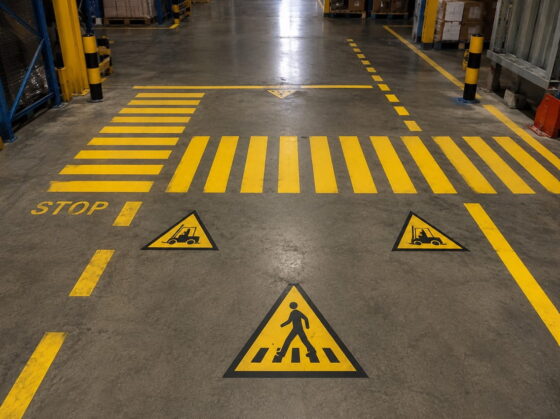
These floor markers create walking paths to help employees move safely through facilities that use multiple forklifts and pallet jacks. They’re commonly marked with green or white floor lines, zebra-style crossings, footprint symbols, or “Pedestrian Only” decals.
In addition to improving safety, they make warehouse traffic feel more organized and predictable, which is especially important during busy shifts. Many facilities use these markers along main travel routes, breakroom paths, and crossing points.
The Occupational Safety and Health Administration (OSHA) has a guide to make the “walking-working surfaces” safer for workers, which you can read for more information.
2. Forklift Lane Signs
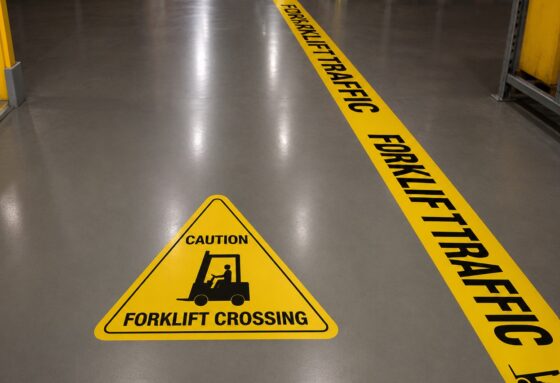
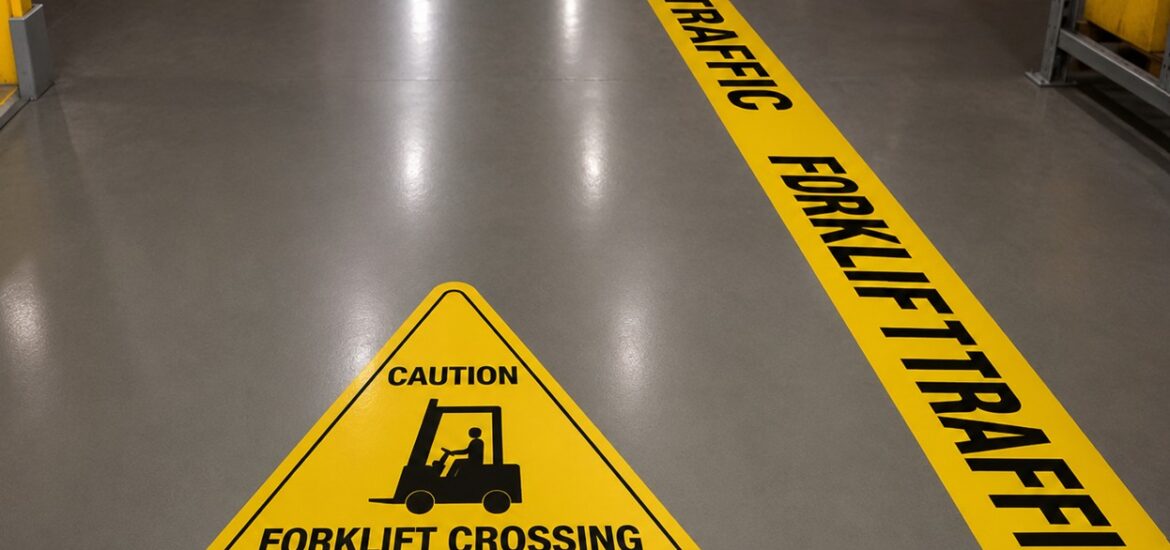
Warehouse facilities use forklift and vehicle traffic lanes to clearly mark boundaries between heavy machinery zones and pedestrian walkways. These signs also help reduce congestion, confusion, and blind-corner accidents.
Yellow is the universal standard color for these floor markings. In some cases, warehouses also add floor stop signs or crossing indicators where pedestrian and forklift traffic overlap.
The National Institute for Occupational Safety and Health (NIOSH) recommends separating forklift traffic and other workers and limiting some aisles to workers on foot-only or forklifts-only.
3. Hazard Warning Zone Signs
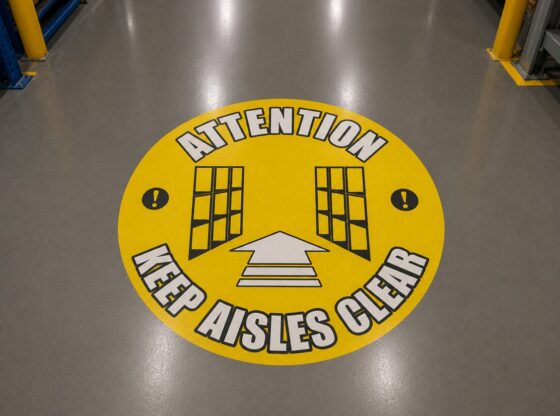
These hazard warning signs are designed to catch attention and signal caution, so they typically come in black-and-yellow striped markings around these areas:
- Equipment operating zones
- Conveyor pinch points
- Loading dock edges
- Low-clearance spots
- Restricted zones
4. Fire-Related Signs and Keep Clear Signs
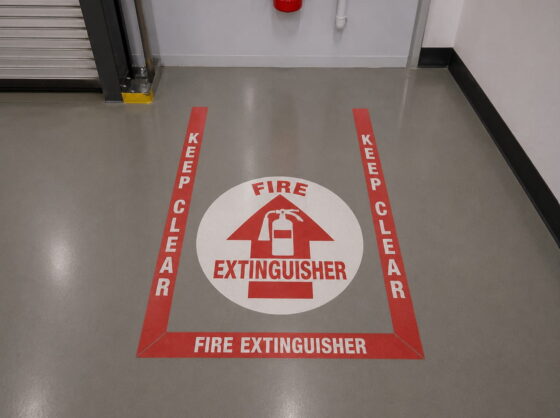
These signs remind workers to keep exit routes, passageways, aisles, and other critical areas accessible and unobstructed. They are usually painted red and placed around these areas and fixtures:
- Fire extinguishers
- Safety equipment
- Electrical panels
- Emergency exits
OSHA provides a guide to make exit routes visible, effective, and legally compliant.
5. Loading Dock Edge Markings
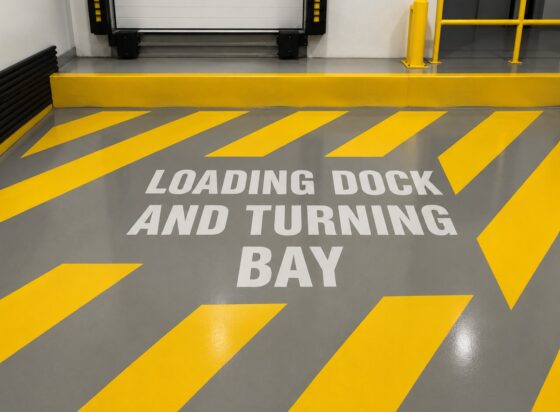
These bright yellow edge markings help workers easily identify dock edges, trailer gaps, and loading zones, especially in fast-paced shipping environments, including the following areas:
- Low-light areas
- Early morning shifts
- Large distribution centers
- High forklift traffic zones
6. Storage and Pallet Boundary Markings
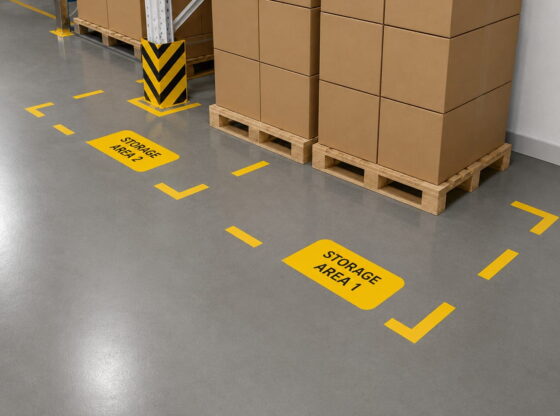
Floor outlines for pallets and storage zones may seem simple, but they play a critical role in warehouse organization. These markings help keep aisles clear and accessible, and the traffic flowing smoothly and safely. They also make the warehouse look more organized, improving workflow efficiency and speed.
Color-Coding Systems in Floor Signs and Markers
Most warehouses use standard color systems to help employees recognize markings and signs immediately. Consistency is also important for making them effective and for allowing people to move confidently within the facility.
Standard color systems used in warehouse and storage facilities:
| Color | Standard Meaning |
|---|---|
| Yellow | Traffic lanes/caution |
| Black & Yellow | Physical hazard |
| White | Storage boundaries |
| Green | Safe walkways |
| Red | Emergency or keep-clear zones |
| Blue | PPE or mandatory instructions |
Conclusion
With strategic placement and correct design, floor markings help make warehouses safer, more organized, and more efficient while ensuring compliance with workplace safety regulations and building codes.
Disclaimer: This article is intended for general informational and educational purposes only and should not be considered legal or workplace safety compliance advice. OSHA, NIOSH, ANSI, and local safety requirements may vary depending on your facility, industry, operations, and location. Businesses must consult qualified safety professionals, legal counsel, or appropriate regulatory agencies for guidance specific to their workplace.