






















Safety signs are mandatory in workplaces, especially in areas with potential hazards and where people operate various equipment and heavy machinery. Whether it’s warning signs or emergency exits, these visuals help prevent accidents and guide everyday actions.
But apart from ensuring that safety signs are visible, updated, and properly installed in the workplace, it’s also a business owner’s responsibility to educate their employees about the meaning of these signs. In this guide, we explore common workplace safety signs to help you keep employees informed and prepared.
11 Common Safety Signs in Workplaces
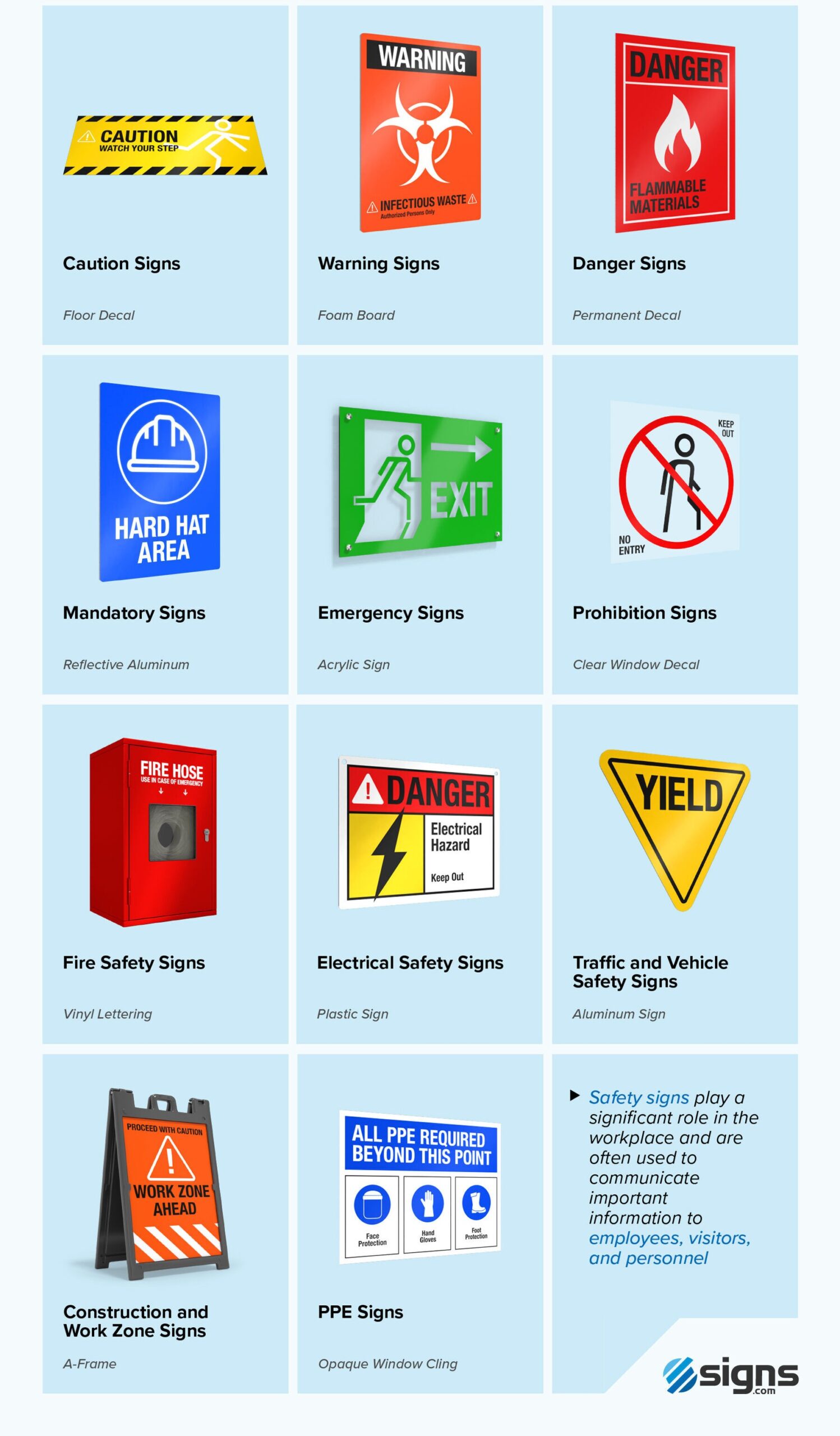
Below are some examples of safety signs seen in workplaces, typically used to promote workplace safety, prevent accidents, and show designated safe areas.
- Caution Signs
These signs usually have a yellow background and are used to warn individuals of potential hazards like wet floors, spills, or oil residue. Some examples include “Caution. Slippery When Wet” or “Caution. Watch Your Step.” - Warning Signs
Warning signs often have an orange background and inform people of potential dangers that could result in injury or death. Examples include “Warning. Confined Space” or “Warning. Infectious Waste Storage Area.” - Danger Signs
Danger signs have a red background and black font. They contain information about immediate hazards that could be a threat to health or life. Some examples of danger signs are “Danger. Flammable Materials” or “Danger. High Voltage Area.”
- Mandatory Signs
Mandatory signs have a blue background and convey information that should be followed in the workplace. Examples include “Mandatory. Hearing Protection Required” and “Mandatory. Hard Hat Area.”
- Emergency Signs
Emergency signs usually have a green background and have information directing emergency exits or procedures. Some examples are “Emergency Evacuation Route. Follow Arrows” and “Emergency Exit.”
- Prohibition Signs
Prohibition signs are signs that show what is not allowed in the workplace. These are required to have a red circle with a diagonal line crossed through a black symbol or text. Signs that say, “No Entry”, No Smoking”, and “Switch Off All Mobile Phones” are some examples. - Fire Safety Signs
Fire safety signs are signs that inform employees, visitors, or other individuals about fire hazards, and could also show directions to fire safety equipment. Examples include “Fire Extinguisher”, “Fire Alarm”, “Fire Hose”, and “Do Not Extinguish With Water”.
- Electrical Safety Signs
Electrical safety signs are signs that have lightning bolt symbols to warn individuals of electrical hazards. Some examples include “Danger of Death”, “Electrical Fence”, and “Electrical Hazard. Keep Out”.
- Traffic and Vehicle Safety Signs
Traffic and vehicle safety signs are for workplaces with vehicular traffic. Examples include “Stop”, “Yield”, “Speed Limit”, and “Buckle Up and Drive Carefully”.
- Construction and Work Zone Signs
Construction and work zone signs are signs displayed to inform individuals about particular areas that have ongoing construction or repair work. Examples include “Work Zone Ahead”, “Area Under Construction”, and “Entering Construction Zone”.
- Personal Protective Equipment (PPE) Signs
PPE signs are signs that remind employees to wear safety equipment in the workplace. Some examples are “All PPE Required Beyond This Point”, “Safety Glasses Required”, “Gloves Must Be Worn in This Area”, and “Hearing Protection Must Be Worn”.
Creating a safe workplace starts with awareness, and safety signs play a big part in making that happen. When people understand what each sign means and its purpose, they come to work more informed and prepared to avoid hazards, prevent accidents and injuries, and respond quickly when it matters most.