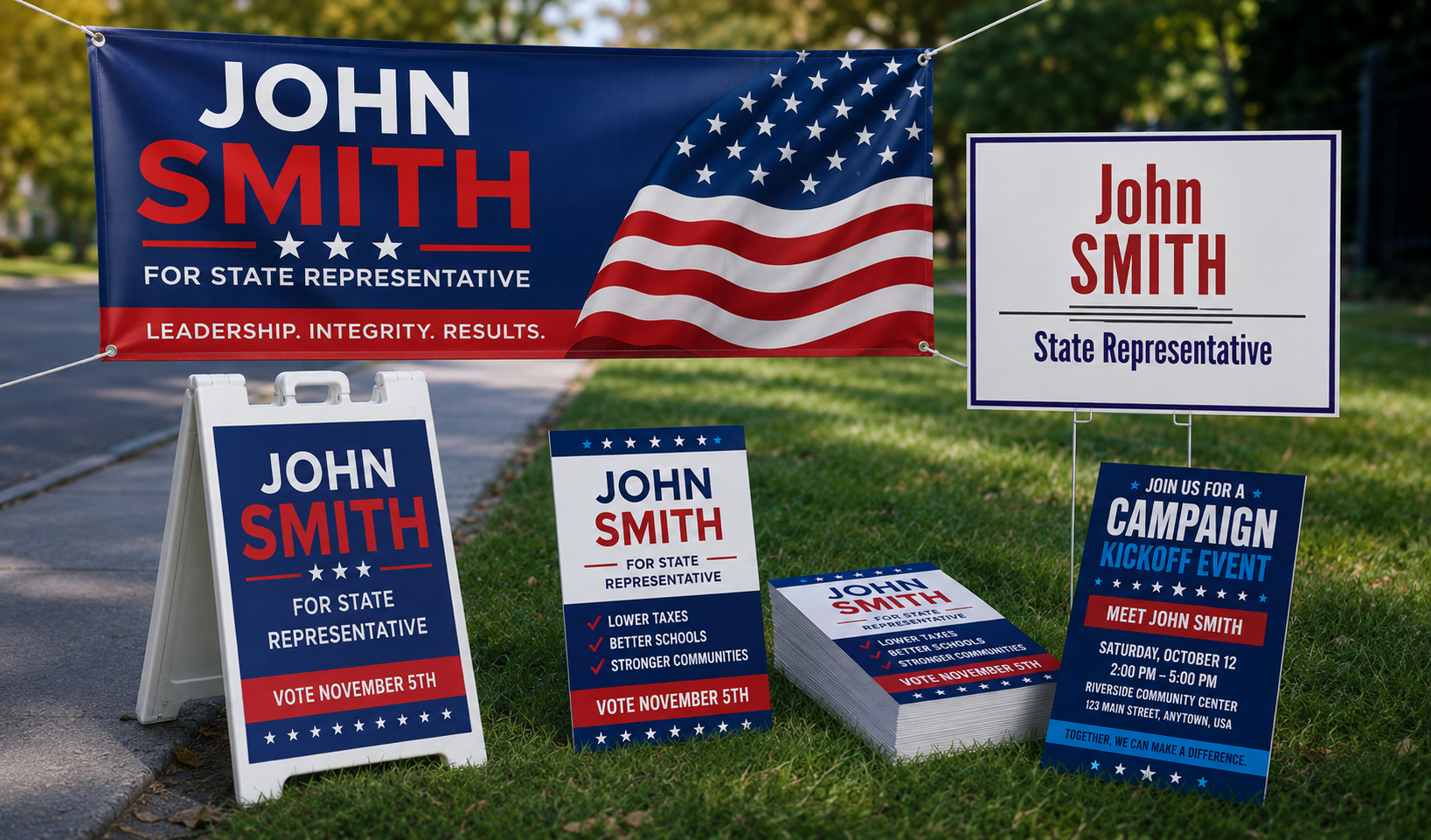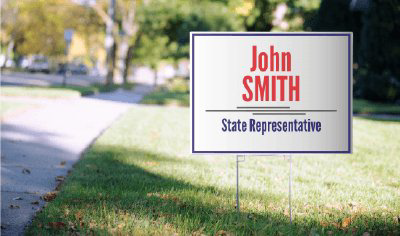

Political yard signs are a great way to boost name recognition during an election, but they’ll only work if people can see them. Placing signs in the right spots helps your campaign reach more voters and makes the most of your volunteers and resources.
In this guide, you’ll find practical tips for putting out signs, assigning volunteers, making your signs stand out, and avoiding common mistakes. With these strategies, your campaign can stay visible from the start of outreach all the way to election day.
Build a Volunteer Sign Deployment Plan
A good way to get ready for an election campaign is to set up a clear plan for where and when to put out political signs. A simple process helps the team keep track of signs and makes sure no locations are missed or signs wasted.
We can break this down into three steps:
- Before starting, make sure each volunteer has a clear route, knows how many signs to put up, understand the installation steps, and is aware of local placement rules.
- While putting up signs, have volunteers write down where each sign goes, note any broken or missing parts, and keep track of leftover signs. Using a shared spreadsheet or map app can make this simple.
- After each round, supervisors should check for any missed spots, plan to replace missing signs, move extra signs where they are needed, and send more volunteers if required.
Sticking to this process during the whole campaign helps keep sign placement organized and consistent.
Plan Campaign Sign Placement by Precinct
Once volunteers are organized, the next step is to decide where to put each sign. If signs are placed randomly, some neighborhoods may end up with too many signs while others have very few, which reduces campaign visibility.
A better way is to organize sign placement by precinct. Focus first on areas with high voter turnout, busy commuter routes, neighborhood entrances, event venues, and other approved spots that get a lot of attention. Remember to think about where volunteers are available and where competitor signs are already placed.
Make a simple map showing where signs should go before handing them out. Assign each volunteer team to a certain precinct or neighborhood, rather than just giving them a set number of signs.
This method helps keep sign coverage balanced, makes it easier to track progress, and quickly shows which areas need more signs before Election Day.
Discerning High-Visibility Locations
- Does the location receive consistent traffic? Streets that commuters use every day usually give your signs more visibility than roads that only get busy sometimes. Try placing signs at neighborhood entrances, big intersections, shopping areas, school routes, and bus stops.
- Do people have enough time to notice the sign? People can read your signs more easily where cars slow down. Good spots include areas near stop signs, roundabouts, and parking lot entrances, rather than fast-moving roads.
- Is placement allowed? Rules for campaign signs are different in each state and city. Make sure you check the rules and get permission before putting up signs on public or private land.
Match the Right Sign to the Right Location
Sometimes, certain campaign locations call for the perfect type of sign to place on them. That’s why planning the right type of signage can help maximize visibility and guide voters. Use this chart to match common campaign scenarios with the signs that work best.
| Campaign Need | Recommended Sign | Why It Works |
|---|---|---|
| Residential neighborhoods | Yard Signs | Yard signs fit naturally in front yards and along neighborhood streets, helping local voters see the candidate’s name many times. |
| Busy intersections (where permitted) | Yard Signs | Smaller yard signs can be placed by the road where drivers waiting at intersections or traffic lights can see them. |
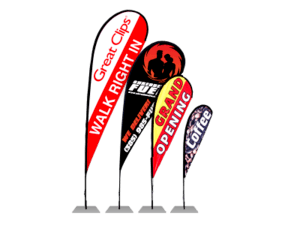
| Campaign headquarters | Feather Flags | Tall feather flags stand out above parked cars, so people can spot your headquarters from far away. |
| Volunteer check-in locations | A-Frame Signs | A-frame signs give clear directions at eye level and are easy to move as volunteer activities change during the day. |
| Rally entrances | Vinyl Banners | Large banners make the entrance feel welcoming, show off your campaign branding, and help people find where to enter the event. |
| Registration tables | A-Frame Signs | Set up A-frame signs near registration to help visitors find their way, see important instructions, or get answers to common questions before they reach the table. |
| Stage backdrop | Event Signs or Vinyl Banners | Use large-format signs as a professional backdrop for speeches, interviews, livestreams, and campaign photos. These signs also help reinforce the candidate’s branding. |
| Parking directions | A-Frame Signs | Portable A-frame signs can help drivers find parking, entrances, exits, and accessible routes during the event. |
| Community events | Feather Flags + Yard Signs | Use feather flags for visibility from a distance and place yard signs around the venue to reinforce campaign messages from different directions. |
How Many Signs Should You Place Per Location?
There isn’t a perfect number of political yard signs for every neighborhood. Rather than worrying about an exact count, try to keep signs visible throughout the area without making it look cluttered.
When deciding where to put signs, think about the neighborhood’s size, how many people live there, how many entrances it has, local sign rules, how many volunteers you have, and how many signs are available. Focus first on main entrances, busy roads, corners that stand out (if allowed), and homes of supporters.
After you’ve covered each target area with enough signs, add more in spots where you think extra visibility will help.
Monitor Sign Performance Throughout the Campaign
Keep an eye on campaign signs, especially as Election Day gets closer. Make sure signs are still visible, haven’t been damaged by weather, and don’t need to be replaced. Go back to important spots to check coverage, look for any changes in traffic, and quickly replace any missing signs. Regular checks help your campaign stay visible and make the most of your signs.
Frequently Asked Questions
Place signs where it’s allowed and where lots of people will see them, like at neighborhood entrances, busy intersections, and on supporters’ lawns. Make sure to follow local election and property rules when displaying your election-related materials.
Give each volunteer a specific area to cover, hand out route maps, keep track of where signs have been put up, and check the coverage after each outing. Having a clear process helps avoid missed spots or doing the same work twice.
Check signs often during the campaign, especially after storms, big events, or heavy traffic. Regular checks help you spot signs that are damaged, missing, or hard to see.
Put yard signs around the area so people nearby can see them. Use feather flags so people can spot the event from far away. Set up A-frame signs to help guide attendees and hang vinyl banners at entrances or on the stage.
Final Thoughts
Successful political yard sign campaigns depend on thoughtful planning, consistent placement, and regular maintenance throughout the election season. By organizing volunteers, tracking inventory, and monitoring visibility, your campaign can make better use of every sign and every opportunity to reach voters. When you're ready to print durable, high-quality campaign signs, Signs.com offers customizable print materials to help keep your message visible from the first day of campaigning through Election Day.