
Putting up signs around your retail store is important if you want to shape how customers experience your business the moment they arrive until they leave. A bold signage at the entrance can attract people, while displays, promotional signs, and clear directions make shopping easier and help certain products stand out.
Picking the right signs makes your store simple to navigate and more enjoyable to explore. In this guide, we’ll look at the main types of retail signs and how to choose the best ones for your store.
Why is Signage Important to Retail Stores
Foot traffic is an essential part for any physical store and retail brand. People usually walk into stores that catch their eye and would immediately decide whether it’s worth stopping there. Signs cover this essential aspect, and if you pick the best options, they can help you for years to come.
Before you start picking the retail signs for your business, you must first learn about the three types of signage:
- Brand signs that showcase your branding to grab people’s attention.
- Promotional signs that work on your windows, displaying what you offer.
- Directional signs that guide and sell once a shopper is inside the store.
Learning to maximize all three can greatly benefit your retail business.
Outdoor Signage for Your Store
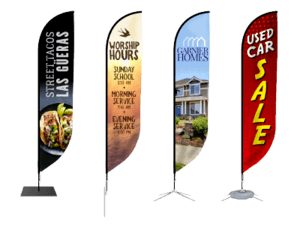
The retail signs outside your store are vital to creating a powerful first impression. They also need to be weatherproof and easy to read from a distance, especially if they will be displayed for a long time.
Vinyl Banners
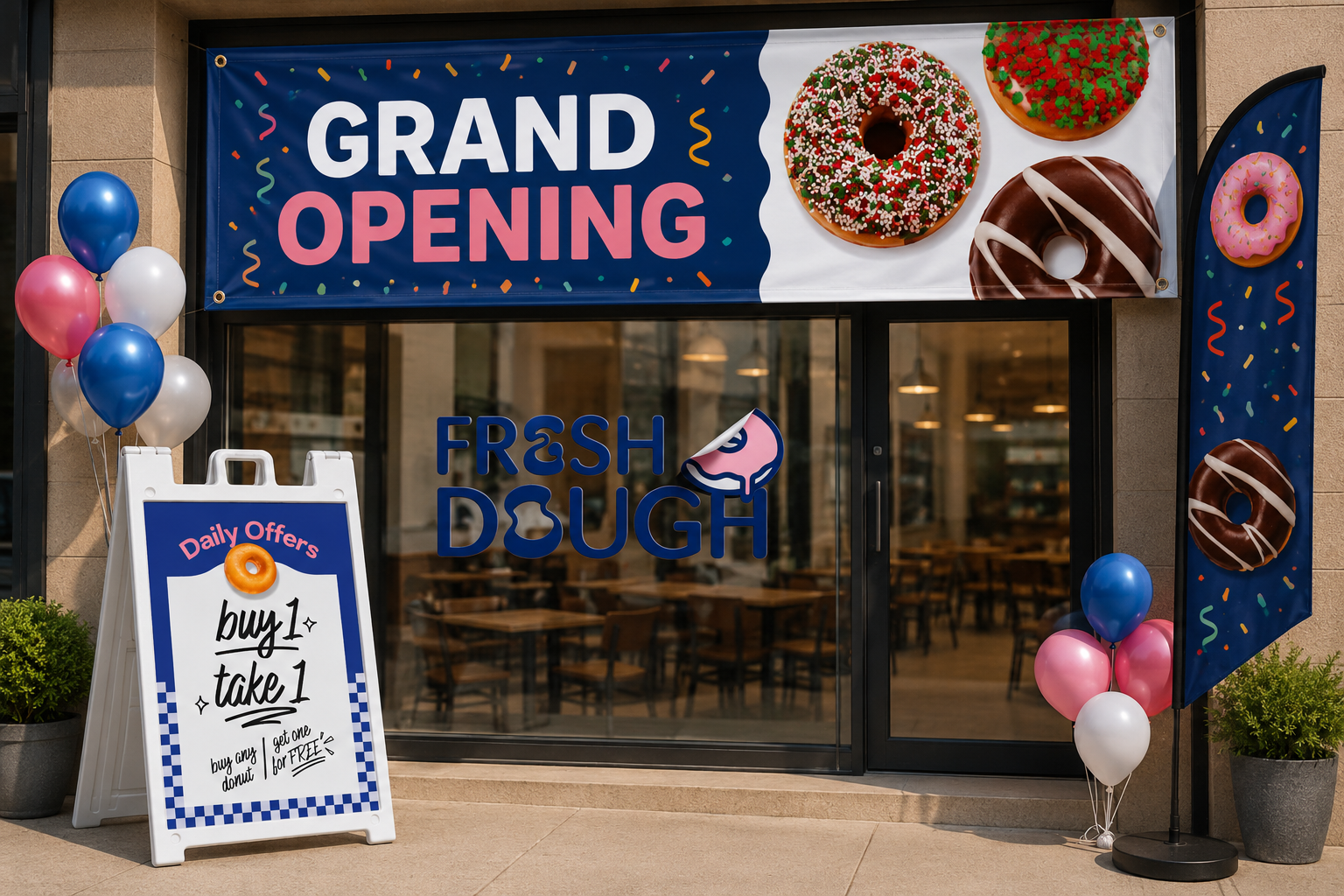
Vinyl banners are a popular choice for promoting your brand and attracting attention. Print your colorful designs on sturdy 13 oz. or 18 oz. vinyl so your message stands out, even from a distance. These banners work well for grand openings, seasonal sales, and special events. The weather-resistant material makes them ideal for outdoor use, and you can choose the size that best fits your storefront. You can also hang these banners on nearby fences or billboards to broaden your retail brand's reach.
Sandwich Board Signs or A-Frames
A-frame or sandwich board signs help you grab the attention of people walking by your store. Place them near your entrance to show off daily specials, new products, limited-time offers, or other promotions. These signs are simple to move, easy to update, and can be stored when you do not need them. By printing two signs and placing them back-to-back on the A-frame, you can expand your message's visibility.
Signage for Your Windows
Your store windows are great for promoting your business. The window sign options below can help you make the most of that space while keeping the view clear for you and your customers. Take a look at some of the best signs to boost your brand’s visibility.
Window Decals
Window decals can be applied to the inside or outside of glass and removed without damaging the surface, making them a good choice for signs that change with the seasons.
- Clear window decals print on transparent vinyl, so only your design shows and the rest of the window stays see-through.
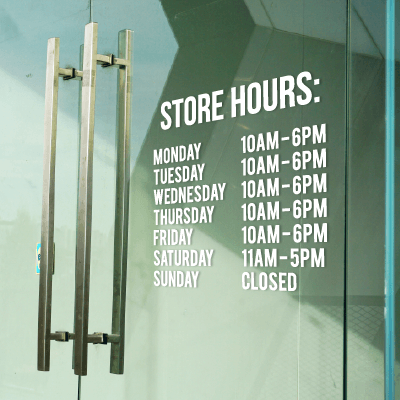
- Opaque window decals print on solid white vinyl. They work well for store hours, sale announcements, or full graphics that should stand out.
- Perforated window decals use tiny holes in the vinyl. Shoppers can see the full graphics from the outside, while staff indoors can still see what’s inside through the decal.
Signboards and Easels
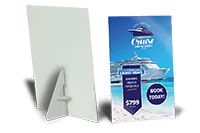
You can also use colorful signboards to show off your promotions in your window. Place corrugated signs, gatorboards, or foamboards on sturdy easels near your storefront windows, next to sample products and displays, to highlight what you are offering. This works well for seasonal sales and themed promotions.
Signage Inside the Store
Once a customer is inside, the signs should shift from getting attention to guiding customer decisions. This includes pricing, product information, sale pricing, and simple directions like where to find the products they want.
Point-of-Purchase and Sale Signs
Sale signs have the greatest impact when you place them where customers decide to buy. Place signs at the entrance, on walls and shelves and racks, and by the checkout counter. Posters and foam board signs are budget-friendly and simple to change, so they work well for short-term sales.
If you want a step-by-step guide on where to place signs during a sale, check out Signs.com's guide to sale signage for retail stores.
Directional Signage and Location-Specific Labels
Most store signs are designed for promotions, while more permanent signs help customers find their way around. Wall decals and vinyl lettering are good choices for branding, mission statements, or simple directions like "Fitting Rooms" or "Checkout." Foam board and rigid plastic signs are often used for shelf-edge pricing and rack toppers.
A Simple Buying Checklist
Once you know your options, start by making a checklist. Write down the signs you need and keep these points in mind:
- Decide where each sign will go, such as the sidewalk, a window, a wall, or your storefront.
- Think about whether the sign needs to handle rain, wind, or direct sunlight.
- Choose the material that fits how long you want the sign to last.
- Keep your message short. Signs that are easy to read from far away always work best.
- Use the same colors and fonts across all your signs to keep your store looking organized.
Good signage is not about one sign doing it all. Instead, use a set of signs, each in the right place, to attract customers and help them find what they need.
Picking the Right Sign Material
The material you choose for your sign affects its durability, cost, and suitability for various locations. Below is an overview of common materials used for retail signs.
- Vinyl is commonly used for banners, decals, and lettering. It resists water and fading, can be displayed in most locations, and is more affordable than rigid materials. Vinyl banners are suitable for both indoor and outdoor use, offering flexibility for most retail environments.
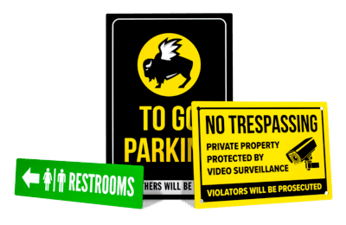
- Aluminum signs are durable, weather-resistant, and maintain their shape and color. They are ideal for permanent outdoor applications such as store names, parking signs, or directional signage.
- Acrylic resembles glass but is lighter and more impact resistant. It’s often used because of its sleek, polished appearance, making it suitable for lobby signs, entrance displays, or register signage.
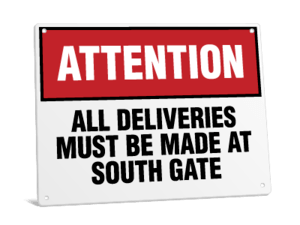
- Rigid plastic or Coroplast signs are lightweight, cost-effective, and available in various thicknesses. They are well-suited for temporary uses such as sale signs, parking lot yard signs, or signage that needs to be relocated.
Matching Signage to Your Store's Needs
Each store has its own needs depending on size, location, and how many people walk by. For example, a small boutique on a busy street might just need an A-frame sign and some window decals. A bigger store in a shopping center could use a storefront banner, signs to guide customers inside, and sale signs that change regularly. Signs.com's retail signage collection organizes these products by how they are used in stores, so you can easily compare your options.